The Preemie-Pacer Bottle
An improved method for feeding preterm infants
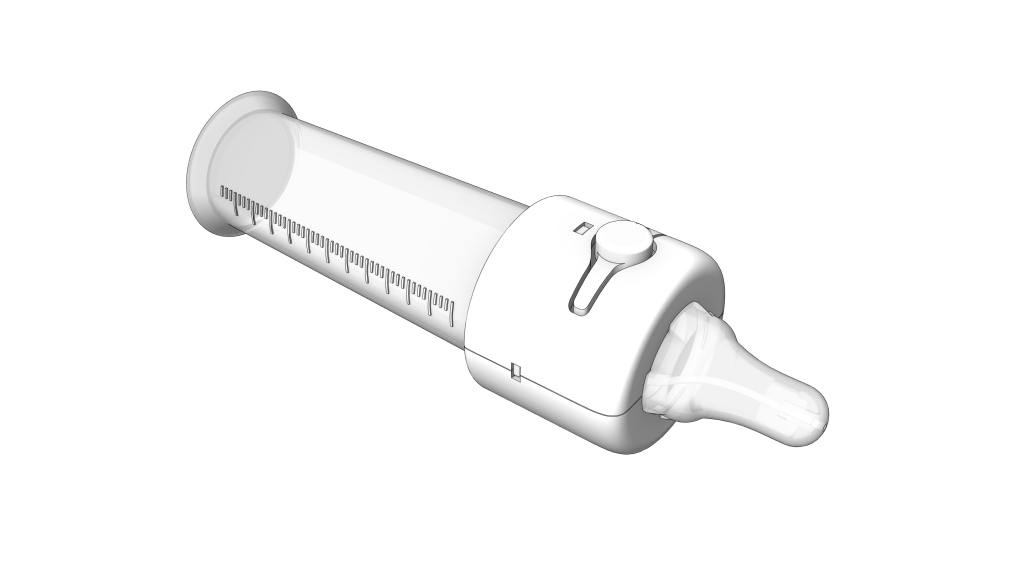


- What is the Preemie-Pacer?
- The Problem
- Methods of Pacing
- An Innovative Approach with the Preemie-Pacer
- Other Populations
- Preemie-Pacer Bottle Specifications
- How to Provide Paced Feedings for a Preterm or Immature Infant
- Contact Information
What is the Preemie-Pacer?
The Preemie-Pacer bottle is a unique feeding device that enables the caregiver to start and stop the flow of milk during the feeding.
The Preemie-Pacer bottle can improve the delicate process of early oral feeding in infants born preterm and with other complex medical conditions. Improved early feeding can enable maximal nutritional intake without physiological consequences, which could result in shorter periods to full oral feeds, shorter hospitalization, fewer feeding related problems, and increased parenting confidence.

The Problem
Healthy full-term infants have mature feeding skills and are able to regulate or “pace” their oral feeding without support. During oral feeding, there is sucking, swallowing, and breathing which happens in a quick and coordinated pattern without any external support of the process needed. However, pacing of the. flow of milk is essential for many high-risk infants. For preterm infants, pacing is important due to their immature central nervous system, which does not signal them to pause for breathing while feeding. This results in inadequate air exchange with physiological compromise, specifically oxygen desaturation and dangerous drops in heart rate. Such events deplete energy stores needed to adequately grow and can be life threatening.
Methods of Pacing
To address issues of suck-swallow-breathe discoordination, caregivers pace the flow of milk by either tilting the bottle to remove milk from the nipple or removing the nipple from the infant’s mouth completely. However, these methods disrupt the feeding process for the infant, requiring increased energy to re-gain a sucking pattern and with some infants unable to reorganize during the feeding at all.
An Innovative Approach with the Preemie-Pacer
The Preemie-Pacer allows the feeder to stop the flow of milk without tilting or removing the bottle nipple from the infant’s mouth, allowing nonnutritive sucking to continue while the infant regains their physiological and energy balance to continue the feeding. Milk flow is enabled by releasing the finger on the flow button and is stopped by pushing the flow button. This allows the infant to reduce energy expenditure and physiological stress, which could provide them the opportunity to optimize consumption of the full feeding amount.
Other Populations
The Preemie-Pacer bottle can also be used with infants with swallowing challenges, such as those who have had cerebral injury. The caregiver is able to carefully control the flow of milk (dictating when it flows and when the flow of milk is stopped) and give the infant ample opportunity to clear previous volume before allowing more milk to be introduced. The PreemiePacer allows the infant to achieve organization with very small volume without having to manage full volume that comes from a regular bottle nipple. It also can be used to administer milk drops, but with appropriate oral motor/sucking patterns which can increase therapeutic response.
The Preemie-Pacer can be used with infants who have gastroesophageal reflux, with the ability to consume volume at a significantly slower pace and with more time for full clearance following each bolus. Finally, parents can simulate breastfeeding by enabling quick succession of sucks for a few minutes at the beginning of the feeding before allowing milk to flow, which can aid in easier transition between breast and bottle.

Preemie-Pacer Bottle Specifications
The PreemiePacer bottle has a standard slow flow rate of 5-7cc per minute when continuously flowing from sucking pressure of 28mmHg to 38mmHg, based on laboratory testing. The Preemie-Pacer nipple and bottle cap attachment weigh approximately 1 ounce. This weight does not include the bottle and milk.
The caregiver who is feeding the infant can control whether the milk is stopped (which would result in an experience similar to the infant sucking on a pacifier with no ability for milk to be extracted) or is flowing (functioning like a regular bottle) by pushing and releasing the button on the side of the Preemie-Pacer bottle (conveniently located where hand placement typically occurs using a bottle). The Preemie-Pacer bottle allows the feeder to externally pace the infant, but instead of removing the nipple from the infant’s mouth, the feeder can release and push the button to stop and start the flow of milk. The Preemie-Pacer bottle enables the infant to orally feed from a standard shape nipple. each nipple cap attachment arrives sanitized and ready for use. This is combined with a bottle (gradufeeding/volufeeder) which are typically available in large quantities within a NICU.
All parts are disposable and should be discarded after each use. The bottle can be put together and ready to feed int he infant in less than 30 seconds.
How to Provide Paced Feedings for a Preterm or Immature Infant
First, the infant is encouraged to root and latch onto the bottle nipple and initiate sucking. Pacing the flow of milk can happen in different sequences, based on a number of sucks, or can be used based only on when the infant demonstrates stress signs.
For predetermined patterned pacing— It can be assumed that each suck lasts 1 second, with an associated breath also being one second. There is literature to support allowing 3 sucks (3 seconds) and then 3 seconds of a pause with no milk exchange to enable breathing. Therefore, the feeder can count three sucks while the bottle has milk flow (approximately 3 seconds) followed by lifting the finger from the flow button to shut off the flow of milk for 3 seconds. Some infants will be able to tolerate longer sequences (up to 10 sucks without a break), while some babies may need to be paced after each suck with the need for longer pauses.
For pacing based on infant signs— To allow the infant to drive the feeding process, the start and stop of milk can be controlled based on the infant’s stress signs. The flow of milk can be stopped (by placing the finger on the flow button) when relevant stress signs are observed, such as wide-eyed stare, eye tearing, and/or increased neuromuscular tone. Other indicators to pace or completely stop the flow of milk include: repeated suck-swallow sequences without pausing to breathe and showing signs of risk for physiological compromise. In these instances, the feeder pushes the button on the side of the Preemie-Pacer bottle to stop the flow of milk. The flow should not be re-started, by releasing the flow button, until the indicator for stopping the flow has resolved.
Programmable and Data Collection Preemie-Pacer Device
There is another, more complex Preemie-Pacer device that stops and starts the flow of milk based on caregiver timing or preprogrammed algorithms, which are currently under development using clinical data from high risk infant feeding. This will allow the bottle to be programmed to self pause milk flow in a specific pattern, based on specific infant factors. This device is also a data collection device, capturing the timing that caregivers use for external pacing. A study of 100 infants is nearing completion and will aid in future development of the device.
Request Samples Here (include mailing address)
Your message has been sent

Contact Information:
Please email preemiepacer@gmail.com with any questions.
 Preemie-Pacer LLC